Best Viewpoints in the Annapurna Region
Published on June 28, 2025

he majestic Annapurna region in central Nepal is a journey into the heart of nature’s grandeur and mystery. For adventure photographers and scenic viewpoint seekers, these high-altitude platforms provide much more than breathtaking panoramas; they are sanctuaries for introspection, technical mastery, and soulful connection with the sublime forces of the Himalayas.
In this guide, we’ll explore the best viewpoints in the Annapurna region, share the technical and creative opportunities these viewpoints offer, and delve into the deeper meaning behind what makes these locations so transformative.
Overview of the Annapurna Region
The Annapurna region is one of Nepal’s most celebrated and diverse trekking areas, hidden amongst the rugged mountain ranges and lush valleys. Dominated by the snow-capped Annapurna Massif and protected within the Annapurna Conservation Area—a haven for unique flora and fauna—this region offers pilgrims, trekkers, nature lovers, and photographers a living tapestry of nature. Here, every ridge, village, and glacier tells a story of ancient myths and modern adventure.
If you love photography, Annapurna is an expansive canvas where each dawn and every dusk immerses the land in hues of gold and crimson. Yet, beyond its visual splendor, the Annapurna region inspires you to explore your inner landscape, to pause and reflect on the transient nature of life against a backdrop of gigantic, mighty Himalayas.
Viewpoints in the Annapurna region are like portals to rare, ephemeral moments. As the light meets these landscapes, it feels like a dance of color and shadow. For photographers, these moments provide a huge opportunity ready to be captured as the interplay of early-morning glow, long shadows, and dramatic contrasts demands creative precision and expertise. But even more, these viewpoints invite you to slow down, contemplate the vastness of the world, and recognize how small we are compared to nature’s grandeur.
When you stand at these vistas, you aren’t merely snapping a picture; you’re experiencing a confluence of art and nature. It’s in these instances that photography transcends documentation and becomes an immersive, poetic dialogue.
Top Viewpoints in the Annapurna Region
Below is an in-depth look at some of the most celebrated and rewarding viewpoints in the Annapurna region. Each location has its unique charm, challenges, and inspirational qualities for that perfect shot.
1. Poon Hill (3,210 m)
Poon Hill is synonymous with Himalayan sunrise magic and perhaps the most famous viewpoint in Nepal. At an elevation of 3,210 meters, it is one of the most accessible yet mesmerizing spots in the Annapurna region. Arriving before the break of dawn, you’re greeted by a gradual unveiling of the horizon, where the first light sets the massive peaks—Annapurna South, Dhaulagiri, Hiunchuli, and Machapuchare—in a halo of warm colors. Poon Hill is not just a spectacle of light; it is a moment of calm that fosters introspection as the world awakens around you.
Photography tips:
- Golden Hour: Capture soft, early light that accentuates the textures and contours of peaks.
- Long Exposure: Experiment with long-exposure techniques to smooth out the movement of clouds and add a dreamlike quality.
- Composition: Use natural framing using ridgelines and nearby trees, balancing the wooden foreground against the towering mountains.
To reach Poon Hill, join our Poon Hill Trek.
2. Annapurna Base Camp (4,130m)
Annapurna Base Camp (ABC) is more than just an endpoint on the Annapurna Base Camp Trek —it’s a microcosm of the Himalayan world. ABC sits encircled by towering peaks such as Annapurna I, Annapurna South, and Hiunchuli. The trek here is a narrative of endurance and discovery, where every step forward is rewarded with panoramic views that stir both the senses and the soul. At ABC, you will find that the journey itself is the image—a melding of nature’s raw elements with human perseverance.
Photography tips:
- Dynamic Range: The interplay of snow and rocky outcrops creates high-contrast scenes ideal for HDR (High Dynamic Range) photography.
- Natural Amphitheater: Use the surrounding peaks to frame your shots, capturing the vastness of the natural “collage” before you.
- Emotional Connection: The challenges of reaching ABC often bring moments of personal triumph, making your images emotionally resonant.
To reach Annapurna Base Camp, join our Annapurna Base Camp Trek.
3. Tilicho Lake (4,919m)
At 4,919 meters, Tilicho Lake is among the highest lakes in the world, offering an almost surreal encounter with high-altitude nature. Tilicho, known for its striking turquoise water, is a mirror reflecting not only the surrounding barren cliffs and glaciers but also the deep, timeless beauty of the Himalayas. Tilicho Lake reminds us that amidst the harshness of high altitudes, nature can also be an oasis of vibrant color and reflective stillness.
Photography tips:
- Color Contrast: The lake’s vivid blues create a dramatic contrast with the muted grays and whites of its surroundings, making it a favorite subject for color photography. In colder months, the ice covering the lake provides a white blanket, elevating the lake’s beauty.
- Changing Moods: Tilicho Lake transforms with the weather—at times tranquil and inviting, at others stark and austere—each condition offering a different mood to explore with your lens.
- Philosophical Reflections: Capturing Tilicho is like translating the language of nature into a visual poem. You will find profound serenity when contemplating this isolated, almost mythical body of water.
To visit Tilicho Lake, join our Annapurna Circuit with Tilicho Lake Trek.
4. Thorong La Pass (5,416 m)
The pinnacle of the Annapurna Circuit, Thorong La Pass stands at a staggering 5,416 meters. Crossing this pass is both a technical conquest and a soulful pilgrimage. It offers expansive, uninterrupted views of the Annapurna and Dhaulagiri ranges—a panorama that few places on earth can rival. Thorong La is a reminder that some of life’s most inspiring moments are found in the convergence of personal challenges and the raw beauty of nature.
Photography tips:
- Wide-Angle Opportunities: The sheer scale of the vistas makes wide-angle lenses ideal for capturing the vastness and detail of the mountainous terrain.
- Atmospheric Conditions: The dramatic interplay of sun, snow, and shadows can produce high-contrast imagery ideal for black-and-white photography.
- Emotional High: The effort required to reach Thorong La is as significant as its visual rewards. You will feel as if you are standing at the edge of the world, you feel both insignificant, but deeply connected to the earth beneath your feet.
For Thorong La Pass, join our Annapurna Circuit Trek.
5. Khopra Ridge (3,660m)
Khopra Ridge is another viewpoint in the Annapurna region that offers an unspoiled and solitary vantage point at 3,660 meters. This less-traveled path provides an expansive view of Dhaulagiri, Nilgiri, Annapurna South, and Machapuchare, making it an ideal stop for those who seek a quieter, more reflective experience. Khopra Ridge is an invitation to step away from the usual hustle, offering a mindful experience where every click of the shutter echoes with the whisper of the wind.
Photography tips:
- Natural Symmetry: The ridge’s natural contours provide excellent opportunities to capture balanced compositions that highlight both the rugged environment and the vast, open skies.
- Isolation as Inspiration: The absence of other trekkers allows you to immerse yourself in the scene without distraction, fostering creativity and mindful observation.
- Reflective Moments: The solitude found here deepens your connection with the landscape, encouraging you to contemplate not only the beauty of the peaks but also your own journey within them.
To summit Khopra Ridge, visit our Khopra Ridge Trek.
6. Mardi Himal Viewpoint (4,500 m)
Deep within the lesser-known Mardi Himal trek lies a viewpoint that offers intimate perspectives on one of the region’s most iconic peaks—Machapuchare. At about 4,500 meters, the Mardi Himal Viewpoint delivers a close-up encounter with the mountain’s jagged profile, which emerges dramatically against a backdrop of deep valleys and rolling clouds. For the discerning photographer, Mardi Himal is a study in contrasts: the juxtaposition of serene calm with raw, jagged beauty, each frame a narrative of nature’s intricate design.
Photography tips:
- Detail and Texture: The rugged surface of Machapuchare is ideal for capturing fine details when the light casts stark shadows, highlighting the nuances of the rock formations.
- Cloud Play: The phenomenon of cloud inversion, where the peaks seem to emerge from a sea of clouds, provides a dynamic scene for experimenting with contrast and saturation.
To reach Mardi Himal Viewpoint, join our Mardi Himal Trek.
7. Upper Pisang Viewpoint (3,300m)
The Upper Pisang Viewpoint sits at a comfortable 3,300 meters. This vantage point blends the majesty of the mountains with the rich cultural tapestry of local life. Here, modern life and ancient traditions coexist—a harmony that enriches every visual narrative. Upper Pisang offers the reminder that the true beauty of a landscape often lies in its ability to tell multiple stories at once—stories of nature, of time, and of the people who call it home.
Photography tips:
- Human Element: The presence of traditional stone houses, fluttering prayer flags, and local architecture provides an interesting counterpoint to the imposing peaks, suggesting stories of community and resilience.
- Layered Composition: Use the varied elements—the foreground of local life, the middle ground of terraced fields, and the distant, majestic mountains—to create images with profound depth.
- Cultural Resonance: Each image taken here is imbued with cultural significance, as you capture not just a view, but a living tableau of history, tradition, and the human spirit interwoven with nature.
To reach Upper Pisang, you can book our Annapurna Circuit Trek.
8. Ghandruk Viewpoint (2,000 m)
Though Gandruk does not sit on an isolated peak, its broad, elevated terrace opens to sweeping views of Annapurna South, Hiunchuli, and Machapuchare. But this isn’t just about the mountains—Ghandruk is a living, breathing showcase of Gurung culture, with stone houses, terraced fields, and a backdrop that feels like something out of a dream. Every frame here is rich with heritage, bringing together nature and the warmth of local life.
Photography Tips:
- Golden Glow: Early mornings and late afternoons bathe the village in a golden hue—ideal for capturing rustic beauty.
- Local Interaction: Portraits of Gurung villagers or shots of traditional architecture add authenticity to your narrative.
- Mountain Majesty: Frame the peaks towering behind the village to create a balance between human and natural elements.
A visit to Ghandruk is a perfect cultural immersion, especially when trekking the Poon Hill trek.
9. Khayer Lake (4,700m)
At 4,700 meters, Khayer Lake is a sacred glacial lake cradled by the Annapurna range. It is a destination steeped in spiritual significance and dramatic beauty. As you ascend, the landscape shifts from dense forests to alpine meadows, finally revealing the shimmering waters of Khayer, framed by Nilgiri and Annapurna South. Here, the contrast between rugged peaks and serene waters tells a tale of tranquility and power—two forces coexisting in perfect harmony.
Photography Tips:
- Reflections & Light: The still waters provide stunning reflections of the mountains. Capture golden-hour magic during sunrise or sunset for ethereal images.
- Spiritual Narrative: Include prayer flags, stone shrines, and offerings left by pilgrims to highlight the lake’s sacred aura.
- Depth & Scale: Position persons in the frame to convey the vastness of the lake against the grandeur of the Himalayas.
To experience this breathtaking lake, you can embark on the Khopra Ridge Trek, which seamlessly blends adventure with spirituality.
10. Muktinath Viewpoint (3,710 m)
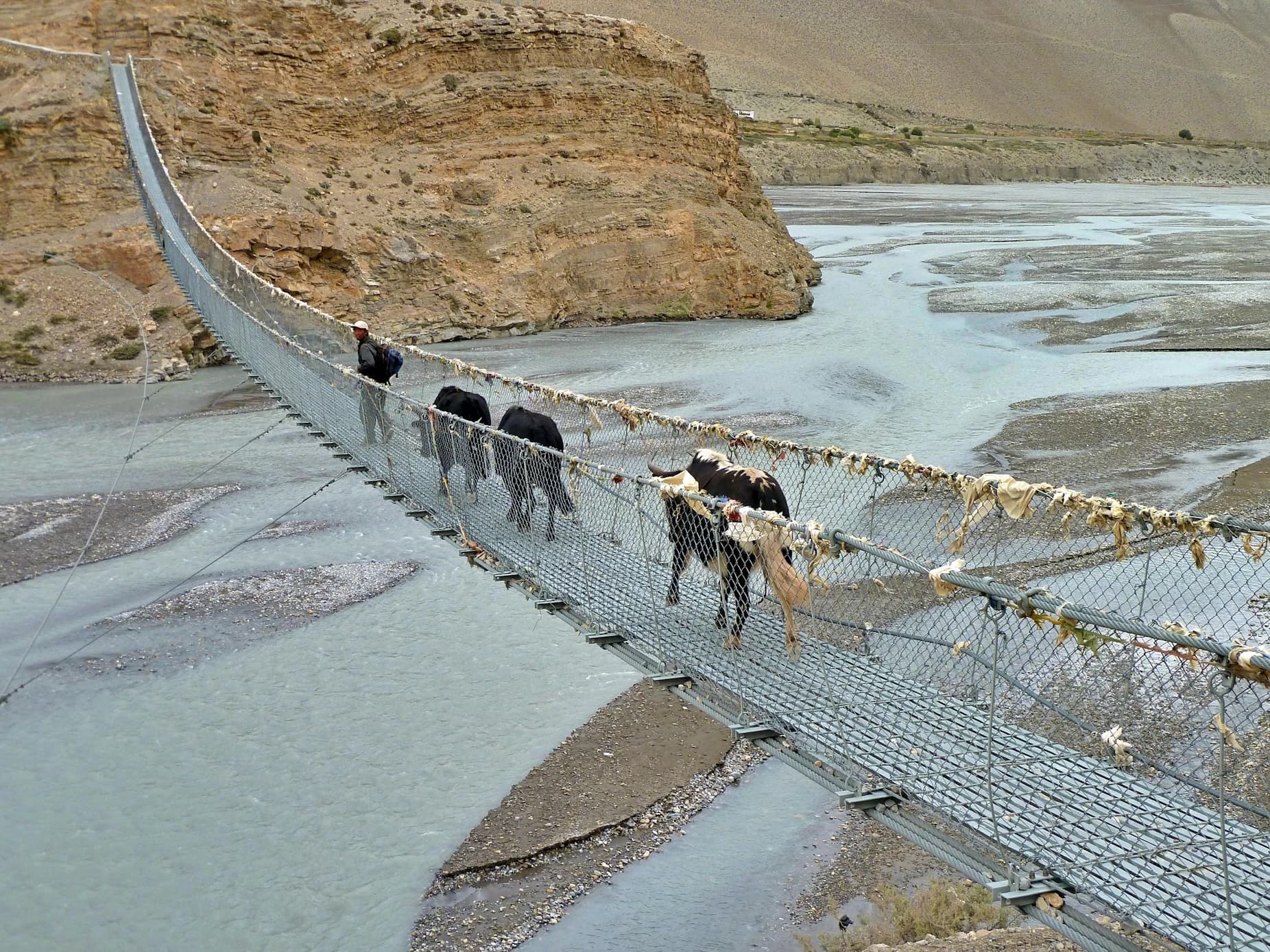
At 3,710 meters in the arid, windswept landscapes of Lower Mustang, the Muktinath Viewpoint is a convergence of sacred energy and stark Himalayan beauty. From here, you are treated to panoramic views of the Dhaulagiri massif, Nilgiri, and the vast Kali Gandaki Valley, all set against the contrasting ochres of the Tibetan-influenced terrain. Muktinath feels like a threshold between earth and spirit, where ancient rituals unfold beneath timeless peaks.
This viewpoint invites stillness. The chimes of prayer wheels, the flicker of butter lamps, and the crisp high-altitude air all weave a sensory tapestry that transcends the visual. You don’t just see Muktinath—you experience it.
Photography Tips:
- Contrast and Texture: You can use the juxtaposition of barren hills with snow-capped mountains to create compelling contrasts in your shots.
- Spiritual Symbols: Frame the 108 water spouts, eternal flame, and shrines against the highland horizon to highlight Muktinath’s spiritual significance.
- Time of Day: Early morning offers soft golden light over the valley, while late afternoon deepens the colors of the Mustang plateau.
To experience the Muktinath Viewpoint, you can trek the Annapurna Circuit.
Honorable Mention
While the viewpoints above form the backbone of a classic Annapurna photographic expedition, here is a stop that merits your attention:
11. Gangapurna Lake (4,600 m)
Far from the beaten track, Gangapurna Lake (Ice Lake) is a hidden gem near Manang in the Annapurna Circuit. In this lake, glacial waters reflect the stark majesty of snow-laden peaks. The interplay of ice and light creates a haunting, ethereal quality that challenges even seasoned photographers. Most trekkers utilize the day they are acclimatizing at Manang to visit this trek.
Photography Tips:
- Polarized Drama: Use a polarizing filter to reduce glare on the lake and enhance the reflective contrast between snow, rock, and sky.
- Timing is Key: Early mornings offer glass-like reflections, while late afternoons bring shifting shadows that add depth to mountain textures.
- Negative Space: Embrace minimalism—use wide-angle lenses to capture the stillness of the lake against the expanse of glacier-fed terrain.
- Color Play: The lake can shift tones—from turquoise to steely silver—depending on weather and light. Bracket exposures to preserve this tonal range in post-processing.
To visit Gangapurna Lake, you can undertake the Annapurna Circuit Trek.
Safety Tips for Trekking to Viewpoints
Trekking through the Annapurna region to capture these viewpoints in the Annapurna Region is both rewarding and demanding. Here are some critical safety tips to ensure your journey remains as safe as it is inspiring.
- Altitude sickness
You must incorporate acclimatization days into your itinerary to adjust to high altitudes. For most of the treks, you will need to buy adequate life insurance. You must familiarize yourself with the symptoms of altitude sickness and never push yourself too hard. If you trek with us, we will take care of your health and wellness. - Weather Awareness
Mountain weather is notoriously unpredictable. Regularly check local forecasts and be prepared for sudden changes. Pack wisely. Invest in windproof and waterproof clothing, and always carry extra layers, especially during early morning or late evening treks. - Hydration & Nutrition
Even if the cool, crisp mountain air makes you feel less thirsty, staying hydrated is crucial as it also decreases the chances of catching altitude sickness. You will need high-energy foods and regular meals to help sustain your energy levels during long treks. - Technical Gear
You need durable camera bags, weather-proof sleeves, and backup batteries to protect your equipment in harsh environments. Ensure you have sturdy, broken-in trekking boots, trekking poles, and other essential gear to support you over rough terrain. - Respect the Environment
Practicing leave-no-trace principles ensures that these pristine environments remain sacred and unspoiled. - Cultural Sensitivity
When passing through villages or near sacred sites, always be respectful and ask permission before taking photos of people or rituals. Understanding local customs not only enriches your experience but also fosters positive interactions with the community.
If you trek with us, we will brief you about all the etiquette you need to follow in these regions.
Conclusion
The Annapurna region is where nature’s raw beauty converges with the intricate art of human experience. Each viewpoint we explored—from the iconic sunrise at Poon Hill to the isolated serenity of Khopra Ridge—offers an invitation to capture not just images, but moments of pure, transformative wonder.
If you are an adventure photographer, each scene is a blend of technical mastery and emotional narrative. The challenge of high-altitude shooting, with its shifting light and unpredictable weather, tests your skills and rewards your perseverance. More than that, these viewpoints serve as personal sanctuaries, where the vastness of the Himalayas mirrors the expansiveness of your spirit.
In the quiet moments at Upper Pisang or the climactic victory at Thorong La Pass, you discover that photography is not merely about pixels and exposure settings. It is about engaging with the sublime, allowing the beauty of the mountains to evoke reflections on life, resilience, and the fleeting nature of every moment.
When preparing for your expedition, consider the Annapurna region not only as a physical challenge but as a journey of the soul. With each step and each click of the shutter, you are creating a visual narrative that captures both the grandeur of the Himalayas and the introspective episodes that arise along the way. Your images become a dialogue between the technical elements of photography and the timeless allure of a natural world that continues to inspire awe and wonder.
At Discovery World Trekking, we believe that exploring these viewpoints in the Annapurna Region is a calling—a quest to witness nature in its most elevated form, both physically and spiritually. We are here to guide you, offer our expertise, and help you navigate these awe-inspiring landscapes safely and memorably.

Scan & Download
Get the ultimate trekking companion on your device!

Scan the QR code to download the app instantly from the Play Store or App Store and start your adventure today.

